TPO vs. EPDM vs. Modified Bitumen: Choosing the Right Commercial Roof in Florida
If you own or manage a flat-roofed commercial building in Florida, three systems will come up in almost every conversation: TPO, EPDM, and modified bitumen. They look similar from the parking lot. They are not similar in how they perform under Florida sun, summer downpours, and rooftop foot traffic and choosing wrong is an expensive mistake to live with for 20 years.
Here’s the honest comparison we give our clients, with no thumb on the scale toward whatever is easiest for us to install.
TPO: The Florida Favorite
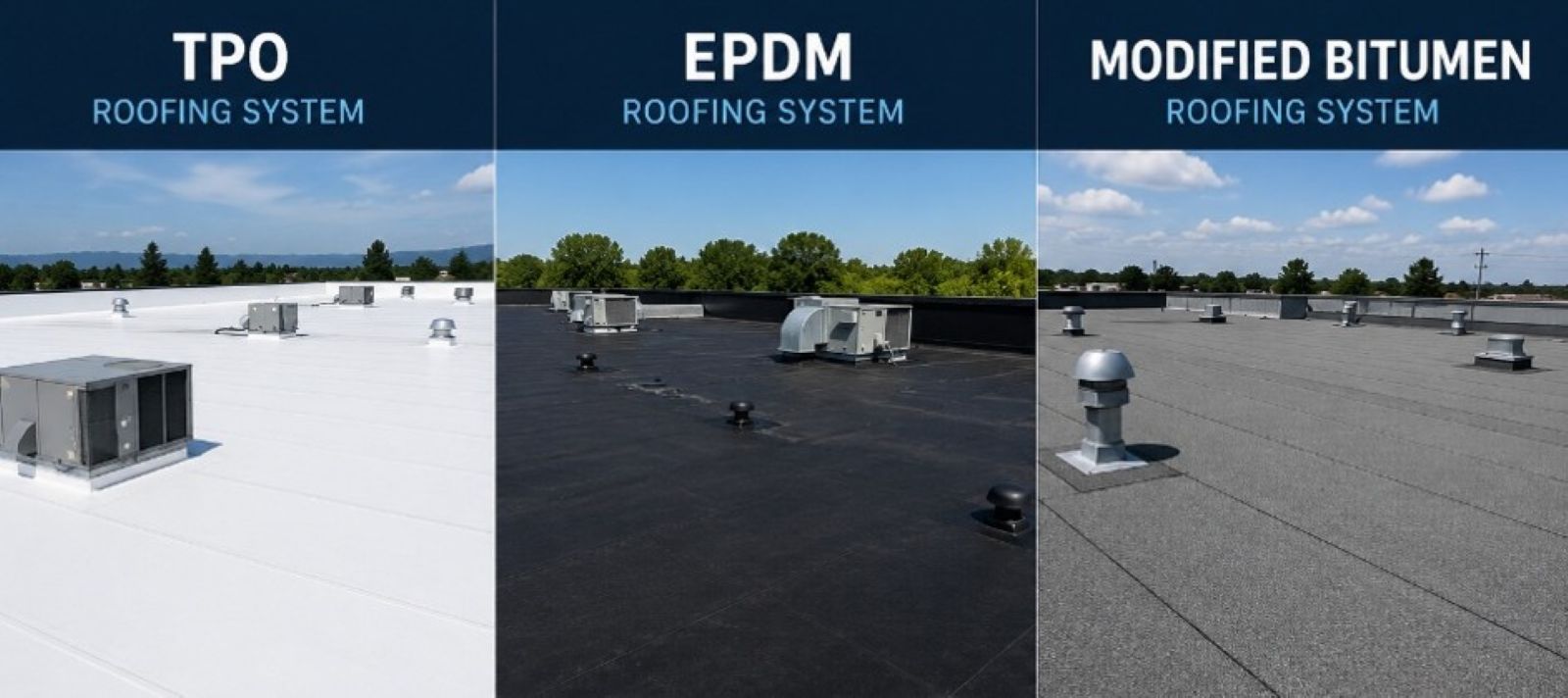
TPO thermoplastic polyolefin is the dominant single-ply membrane across Florida and the Sun Belt, and for good reason. It’s bright white and highly reflective, which matters enormously here: a reflective roof reradiates solar heat instead of dumping it into your building, cutting cooling load through the long Florida summer. It’s chemically resistant, cost-effective, and its seams are heat-welded into a single continuous monolithic surface.
That welded seam is TPO’s biggest strength and its primary failure point. A properly welded seam is as strong as the membrane itself; a poorly welded one becomes a leak in a few years. This is exactly why installer skill matters more than the brand on the roll and why we inspect seam integrity first on any TPO roof.
Best for: Most warehouses, retail, light industrial, and office buildings that want energy savings and a clean, modern white roof at a competitive price.
EPDM: The Durable Workhorse
EPDM ethylene propylene diene terpolymer, basically a high-performance synthetic rubber is one of the most proven single-ply systems in the world, with a long track record on large flat roofs and cold-storage facilities. It’s extremely durable, handles thermal cycling and UV exposure well, and tends to be forgiving over a long service life.
The trade-offs are real for Florida. EPDM is usually black, so it absorbs heat rather than reflecting it the opposite of what you want for cooling costs in this climate, unless you specify a more expensive, white-surfaced version. And its seams are bonded with adhesive rather than heat-welded, which makes seam edges and laps more vulnerable to lifting over time. On a big, uniformly dark EPDM roof, subtle defects are genuinely hard to spot from the ground, which is one reason aerial and thermal inspection pays off on these systems.
Best for: Large flat roofs and facilities where long-term durability and proven performance outweigh the cooling penalty of a dark surface.
Modified Bitumen: The Reinforced Veteran
Modified bitumen is an asphalt-based system reinforced with polymer modifiers and applied in multiple layers torch-applied, cold-adhesive, or self-adhered. It’s common on older commercial properties throughout the Jacksonville area and remains a solid multi-ply option that resists foot traffic and physical abuse well.
Its failure modes are specific: blistering (air or moisture trapped beneath the surface), alligatoring (surface cracking from UV oxidation), and lap-seam failures. The multi-layer construction can hide moisture between piles in ways that are invisible at the surface but light up clearly on a thermal scan which is why infrared imaging is especially valuable when evaluating a mod-bit roof for repair versus replacement.
Best for: Buildings with heavy rooftop traffic, complex details, or an existing mod-bit roof that’s a candidate for layered repair or recovery.
So Which One Should You Choose?
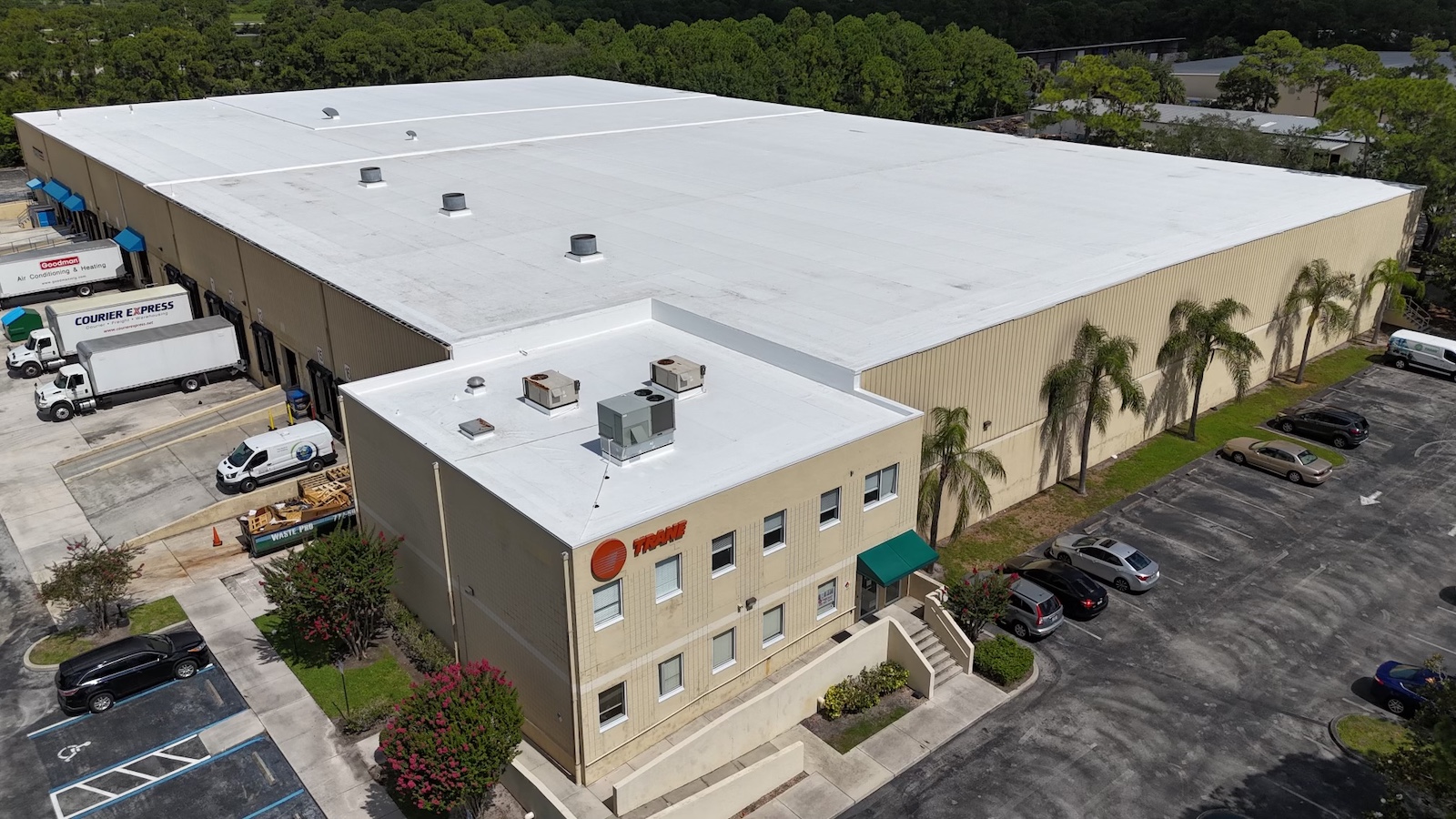
The honest answer is that the “best” system isn’t universal, it depends on your building’s use, your budget cycle, the condition and remaining life of what’s already up there, and your performance priorities. A logistics tenant chasing cooling savings, a cold-storage operator who needs durability above all, and an owner sitting on a sound 12-year-old mod-bit roof should each be steered to a different answer.
That’s the whole point of inspecting before recommending. When we walk a roof with optical and thermal imaging, the conversation about which system to install or whether to replace at all becomes grounded in your actual roof’s condition rather than a sales pitch. Sometimes the right answer isn’t a new membrane at all; it’s a restoration coating, which we cover in detail in our restoration guide.
Why It Matters Who Installs It
Across all three systems, the data is consistent: installation quality drives lifespan more than material choice. A premium membrane installed by an inexperienced crew will fail before a mid-tier membrane installed correctly. SPC Roofers has been installing commercial roofs in Florida since 1978, and we hold certifications with GAF, Owens Corning, Fiber Tite, Elevate, Mule-Hide, and Duro-Last which means manufacturer-backed warranties and crews trained on the specific system going on your building.
We’re fully insured, certified, and licensed, and we stand behind our work with a lifetime workmanship guarantee.
Get a Straight Recommendation
Not sure which system fits your property or whether you even need a new one? Let us inspect your roof and give you an honest, data-backed recommendation.
Call (904) 647-5945 for a free commercial roof inspection and estimate.