
Hurricane Season Roof Prep: A Commercial Property Owner’s Checklist for Florida
Hurricane season runs June 1 through November 30, and in Florida that’s not a date on a calendar — it’s a six-month window where the difference between a documented, prepared roof and a neglected one can be hundreds of thousands of dollars. The time to think about your roof is not when a cone is pointed at Duval County. It’s now, before the first named storm forms.
Here’s the pre-season checklist we walk our commercial clients through every spring. Some of it you can do yourself; some of it is worth bringing in a professional. All of it is cheaper than a claim dispute in September.
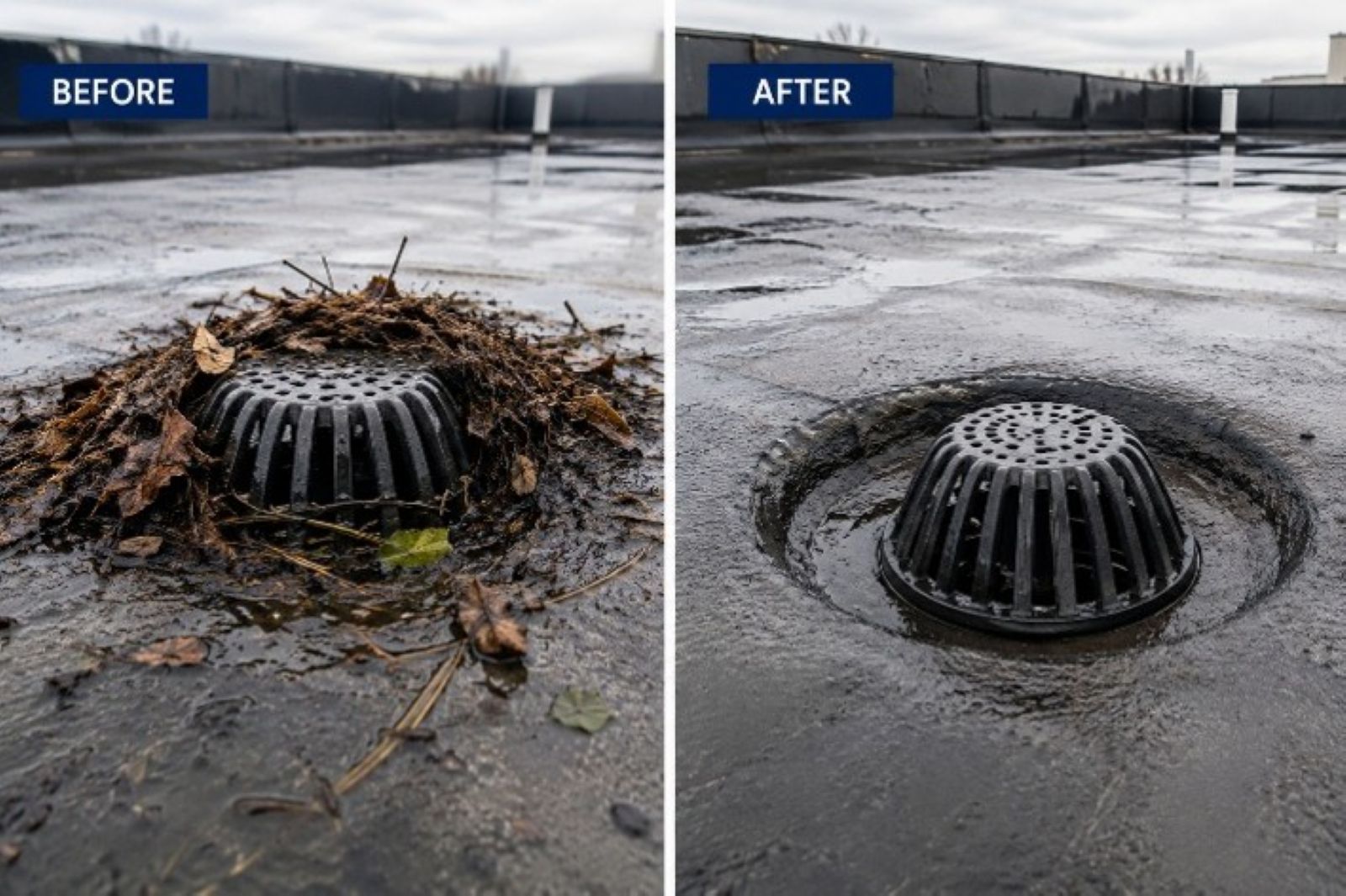
Storm front approaching a commercial property — preparation before the season is your best protection.
1. Get a Documented Pre-Season Inspection
This is the single most valuable thing on the list, and most owners skip it. A pre-season inspection establishes the documented condition of your roof before any storm hits. That baseline is your strongest asset in a claim.
Here’s why it matters: After a storm, adjusters routinely try to attribute damage to ordinary wear-and-tear rather than the storm event — which reduces or denies the claim. Without a dated pre-storm condition record, you’re arguing from memory. With timestamped aerial and thermal documentation from before the storm, you have objective evidence that the damage is new. That single document can be the difference between a paid claim and a fight.
2. Clear Every Drain, Scupper, and Gutter
Florida storms don’t fail roofs slowly; they overwhelm them with volume. A single afternoon can dump several inches of rain. If drains and scuppers are clogged with debris, that water has nowhere to go, and it ponds. Ponding adds enormous weight, finds every weak seam, and is one of the leading causes of storm-related roof failure.
Walk (or fly) the roof and clear every drain, scupper, gutter, and downspout. Check that internal drains aren’t blocked below the surface. This is cheap, fast, and one of the highest-impact things you can do.
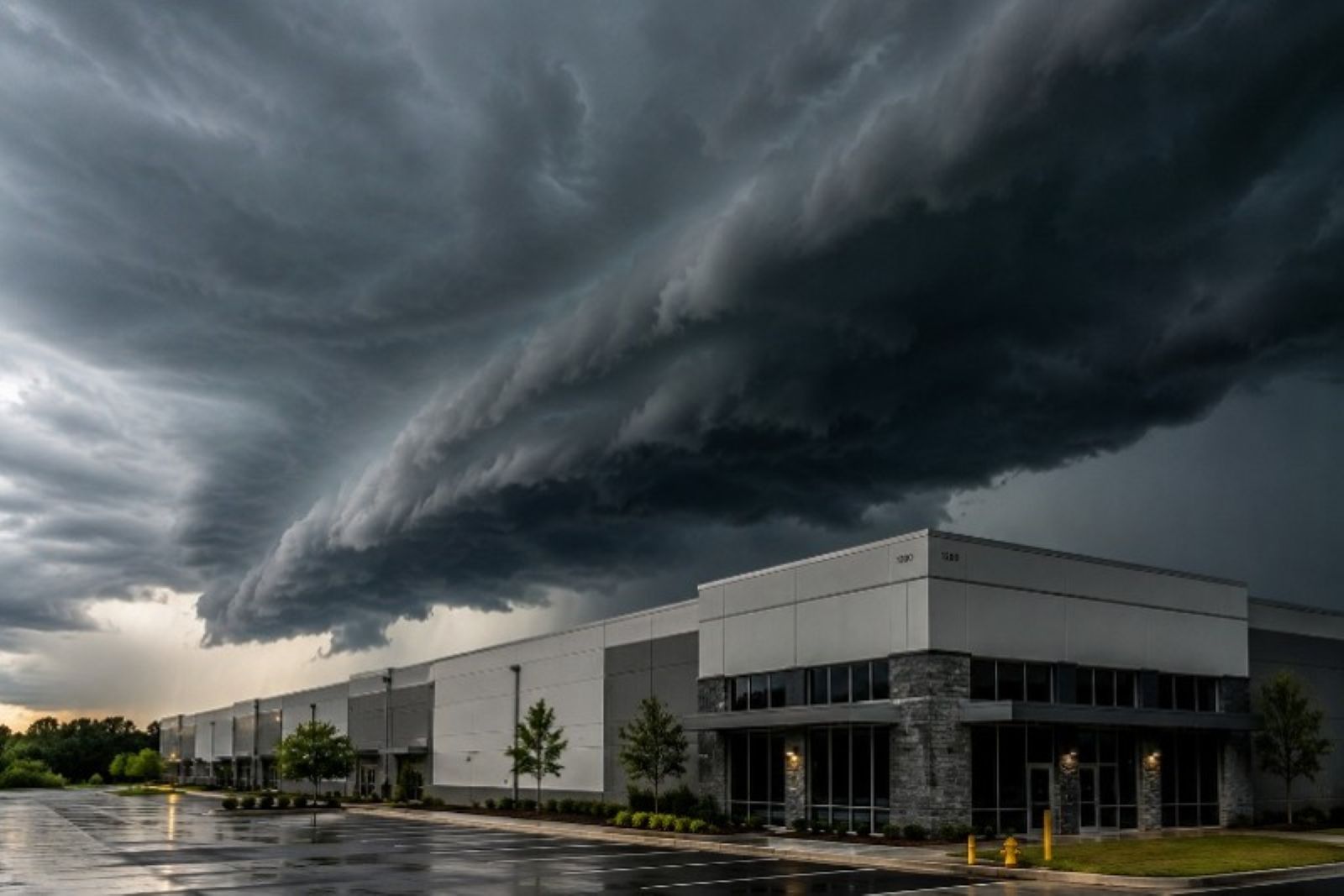
Before and after: a clogged roof drain vs. a cleared one — ponding water is one of the leading causes of storm roof failure.
3. Inspect and Re-Secure Rooftop Equipment
HVAC units, satellite dishes, solar arrays, signage, and loose flashing become projectiles in hurricane-force wind — and the curbs and penetrations around them are prime leak points. Confirm everything is properly anchored and check the flashing and sealant around every penetration. A unit that tears loose doesn’t just damage your roof; it can become a liability that travels.
4. Check Seams, Flashing, and Edges
Wind uplift attacks the roof at its edges and seams first. Inspect:
- Membrane seams for any lifting, opening, or separation
- Parapet and perimeter flashing for loose or deteriorated sections
- Penetration flashing around every pipe, curb, and vent
- Edge metal and coping for secure attachment
The edges and seams that look “good enough” in calm weather are exactly what a storm finds first.
5. Trim Surrounding Trees and Clear the Site
Overhanging branches and nearby loose material become impact debris in high wind. Trim back anything overhanging the roof, and secure or remove loose materials around the building that could be lifted onto it.
6. Document Everything and Know Your Coverage
Photograph the roof’s pre-season condition, keep your inspection report on file, and review your insurance policy before you need it — deductibles, named-storm provisions, and documentation requirements. Knowing what your policy demands ahead of time means you can capture the right evidence the moment a storm passes.
7. Line Up Your Storm-Response Contractor Now
After a major event, every commercial roofer in the region is slammed, and owners scramble to find someone to even look at their building. Establish that relationship before the storm. SPC Roofers offers 24/7 storm damage assessment response, and our drone-equipped teams can begin documenting damage within hours of a storm’s passage — capturing conditions before temporary repairs, cleanup, or further weather can compromise the evidence.
That speed is the whole game. The documentation window after a storm is narrow: water keeps moving, contractors start emergency patching that covers evidence, and adjusters get buried in demand. Getting objective documentation first puts you in the strongest possible position.
The Two-Inspection Habit
The owners who best weather storms tend to follow a simple rhythm: a baseline inspection in late spring before hurricane season, and another in early fall to catch anything the season’s early storms started. Two flights a year build a documented condition history that protects your claims, informs your capital planning, and catches small problems before they become emergencies.
Don’t Wait for the Cone
The cheapest storm damage to deal with is the kind you documented and prevented in advance. SPC Roofers has helped Florida commercial owners prepare for and recover from storms since 1978 — fully insured, certified, and licensed, with a lifetime workmanship guarantee and free pre-season inspections.